Timing Your Upsell: When Intent Signals Say "Now" vs "Not Yet"
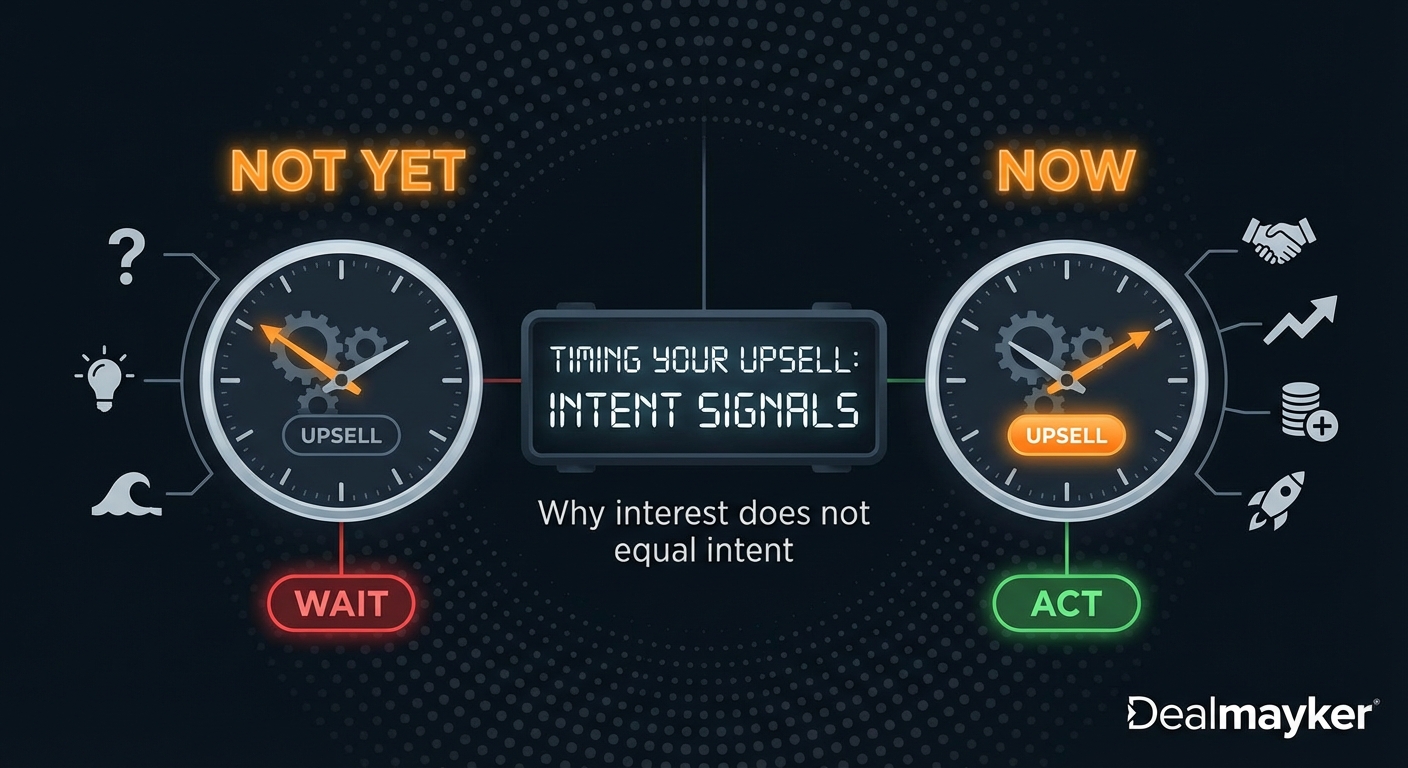
Why interest does not equal intent and how to tell the difference
Confusing Interest with Intent
Curiosity is not the same as buying intent. A customer asking "what else can you do?" might be genuinely exploring, or they might just be making conversation. If you treat every question as a sales opportunity, you train them to stop asking questions.
I have seen CS teams push expansion conversations too early and too hard. At a Fortune 500 logistics company, we had a successful proof of concept with 2,500 users. Leadership wanted to push for the entire fleet immediately. The logic made sense on a spreadsheet: land the proof of concept, show outcomes, expand to the whole population, and increase ARR by 150 percent.
We got direct pushback. The customer's procurement process did not work that way. Their organisational culture required step-by-step expansion, not a one-and-done big bang approach. We were pitching based on our internal forecast timeline rather than customer readiness.
The lesson: your sales targets do not determine customer org readiness. Their procurement culture, budget cycles, and internal decision-making processes do.
Even Good Signals Can Be Mistimed
New funding does not mean budget is available for your expansion. It might be earmarked for something else entirely. A new executive hire does not mean they are ready to greenlight new vendors. They are still in learning mode. Usage spikes might be seasonal, not sustainable growth.
Even when signals look right, partnership maturity matters.
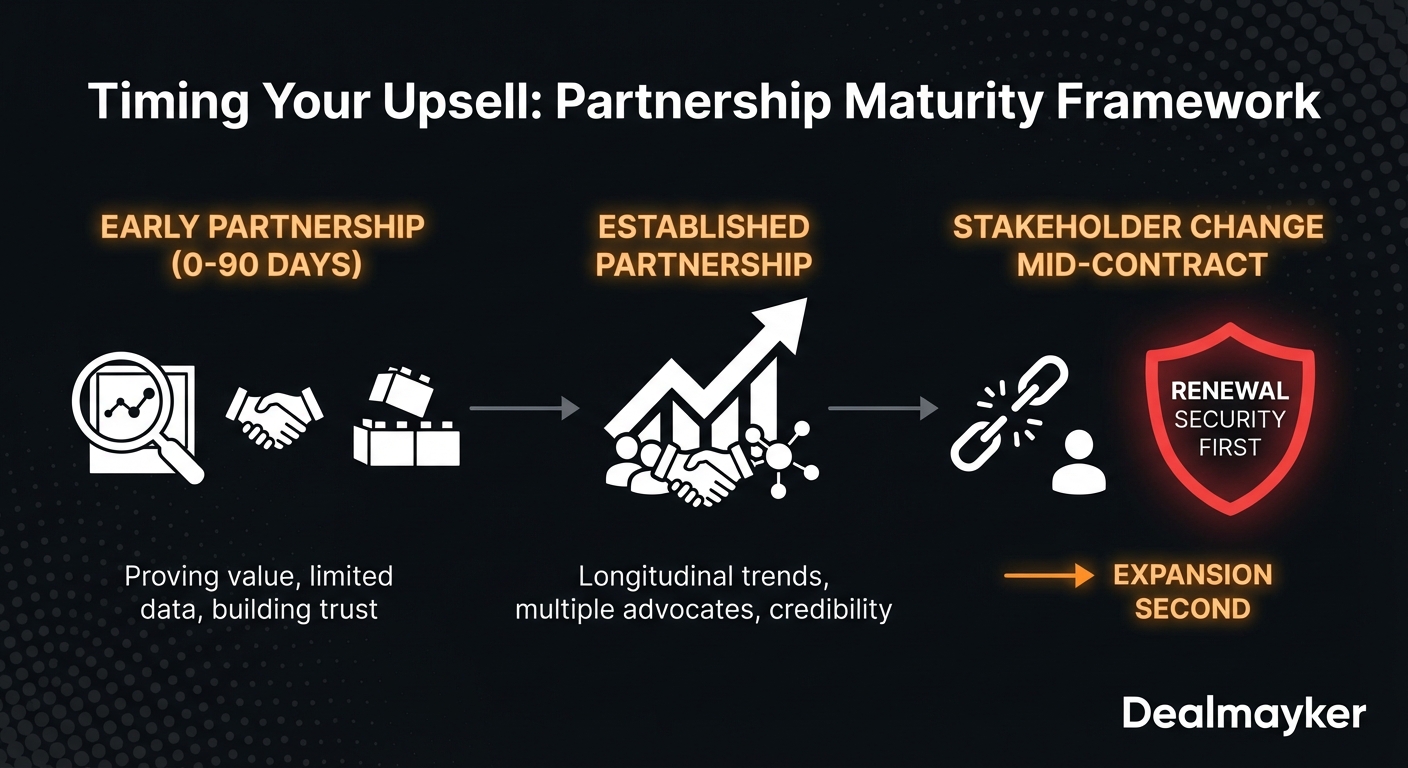
In the first 30, 60, 90 days of a partnership, you are working with snapshot metrics. You are proving value in real time. You do not have longitudinal trends yet. Every interaction is building trust from scratch.
In an established partnership, you have data over time. You have built relationships across multiple stakeholders. You have credibility. But if a key stakeholder leaves six months into a one-year contract, you are suddenly working with limited data and rebuilding trust simultaneously.
If you did not multi-thread early, you are starting over. No internal champions and zero advocates who can sell for you when you are not in the room. Just six months of data and six months left until renewal.
In that situation, upsell is secondary. Renewal security comes first. But if the new leader's quarterly or annual initiatives happen to align with your add-on features, that is your window. You just have to earn it first.
What Actually Works: Build Advocacy Before You Need It
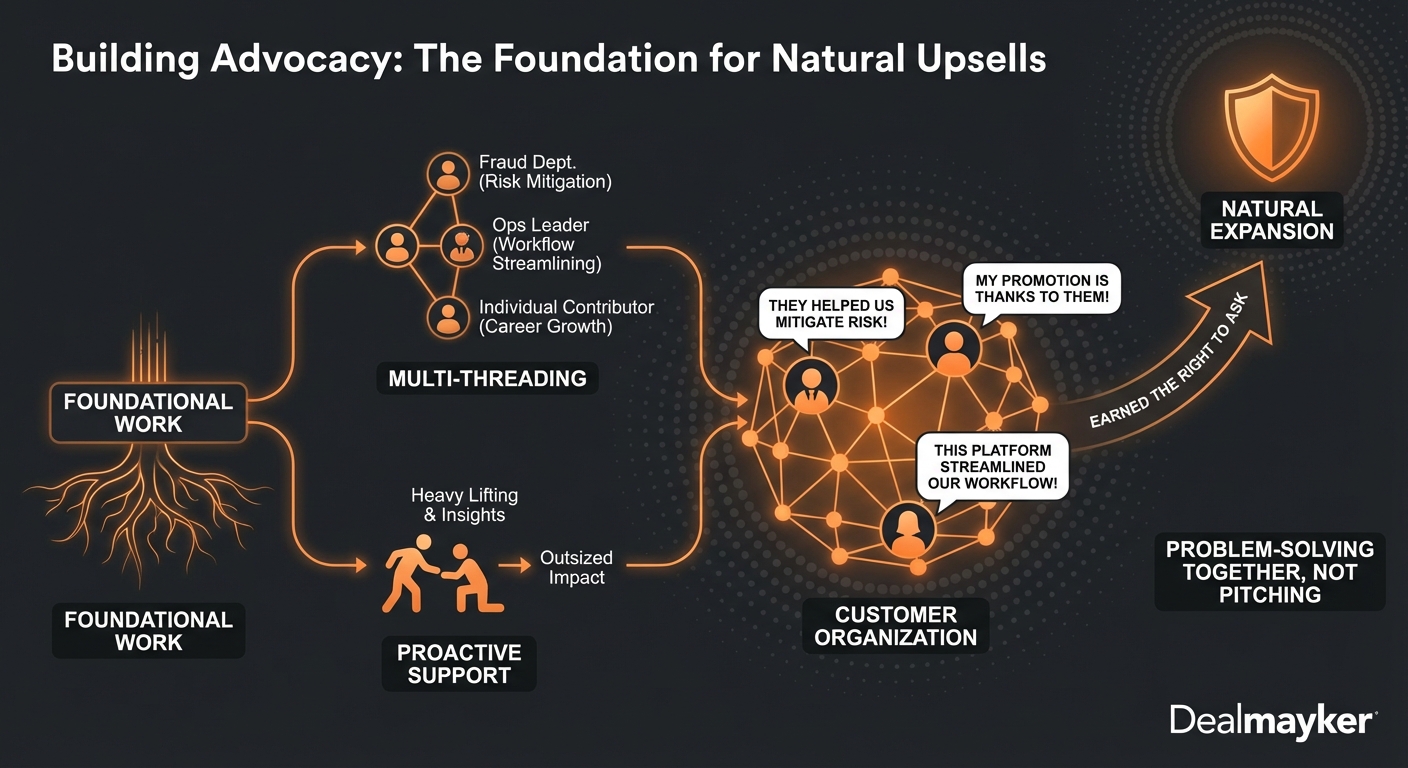
Multi-thread before you need it
When a stakeholder change happens, internal champions sell for you. A fraud department that can quantify saving 10 times your subscription cost because you helped them mitigate risk. An operations leader who credits your platform for streamlining their workflow. These people advocate when you are not in the room.
If you only have one relationship at the account, you are vulnerable. Build relationships at every level before you need them.
Make them look good first, upsell second
I supported an individual contributor at a pharmaceutical company on a project in a specific therapeutic area. We had weekly 30-minute check-ins. I did the heavy lifting: wrangled resources to clean up the work, proactively solved problems before she had to ask, and gave her the insights she needed to present internally.
Her impact became outsized because of the support we provided. She got visibility. She moved from individual contributor to team lead. Our partnership contributed to her career advancement.
That is what making them look good actually means. You do the work that helps them succeed internally, to meet and overachieve their goals. And when things go wrong - when it feels like a house-on-fire situation - you demonstrate urgency. You might not have all the answers, but you know how to triage, escalate effectively, and stay responsive.
When you make stakeholders look good, expansion conversations become easier. Because you are not just selling a product. You are part of their success story.
Track customer expansion signals automatically
Dealmayker monitors funding rounds, executive changes, hiring trends, and growth signals for your accounts - so you know when customers are ready for expansion conversations.
Try FreeRead Partnership Maturity, Not Just Signals
Established partnership: You have longitudinal trends, but you still need advocacy. If a new stakeholder comes in, show them the trajectory: here is where they were before you, here is where they are today, here is where you are going together if the partnership continues.
Stakeholder change mid-contract: Prioritise renewal security. Understand their new priorities. Look for alignment between their initiatives and your solutions. But do not push expansion until you have rebuilt trust.
Time your ask relative to their reality
Your customer's budget cycle is what matters, not your internal forecasts. Their procurement culture, fiscal calendar, and business priorities are number one.
Every interaction with a senior stakeholder should add value. Not just "checking in." Are you bringing insights they can use? Are you helping them solve a problem they care about? Are you making their job easier?
If you are not adding value in every conversation, you have not earned the right to ask for expansion.
Stop Selling, Start Problem-Solving
You are not pitching. You are problem-solving together.
Intent signals are powerful. Tools like Dealmayker can surface funding rounds, executive changes, hiring trends, and competitor activity. It is valuable context that would take hours to research manually. But the signal is only valuable if you have done the groundwork to act on it.
Just like relevancy, timing, and trust matter for new sales, they matter for expansion. The difference is you have the opportunity to build trust before you need it. You can make your customers successful long before asking for more budget.
Interest is not intent. And timing is not just about external signals. It is about whether you have put in the hard work up front to have earned the right to ask.
Know when to expand, when to wait
Get real-time intent signals and account intelligence that shows partnership maturity, not just raw data. Time your upsell conversations based on customer readiness, not your sales targets.
Get Started FreeFrequently Asked Questions
What is the difference between interest and intent in customer success?
Interest is curiosity - a customer asking "what else can you do?" Intent is readiness to act - aligned budget, stakeholder buy-in, and organizational readiness. A customer showing interest in a feature does not mean they are ready to purchase it. Mistaking interest for intent leads to pushy expansion conversations that damage trust.
When should you push for upsell vs focus on renewal security?
If a key stakeholder leaves mid-contract and you did not multi-thread relationships, prioritize renewal security first. Upsell is secondary until you rebuild trust with the new stakeholder. Only push expansion if their initiatives naturally align with your solutions AND you have re-established credibility. Partnership maturity determines timing, not external signals.
How do you build advocacy before you need it?
Multi-thread relationships at every level before stakeholder changes happen. Make your customers look good internally by doing heavy lifting proactively, giving them insights to present to leadership, and helping them overachieve their goals. When you become part of their success story, they advocate for you when you are not in the room.
What does partnership maturity mean for upsell timing?
Early partnership (0-90 days): You are proving value with limited data - focus on outcomes and credibility. Established partnership: You have longitudinal trends and advocacy - show trajectory and growth. Stakeholder change: Prioritize renewal security and rebuild trust before pushing expansion. Maturity determines readiness, not just signals.
Why do intent signals sometimes mislead upsell timing?
Intent signals show something is happening - they do not show customer readiness. New funding might be earmarked elsewhere. A new exec hire is still in learning mode. Usage spikes might be seasonal, not sustainable growth. Signals give you context, but partnership maturity, multi-threaded relationships, and organizational readiness determine if the timing is right.
How do you time upsell asks relative to customer budget cycles?
Your internal sales targets do not determine customer readiness - their budget cycle, procurement culture, and fiscal calendar do. Understand their decision-making timeline, not yours. Every conversation with senior stakeholders should add value, not just "check in." If you are not making their job easier, you have not earned the right to ask for expansion.