The 3 Pillars Every B2B Sale Needs
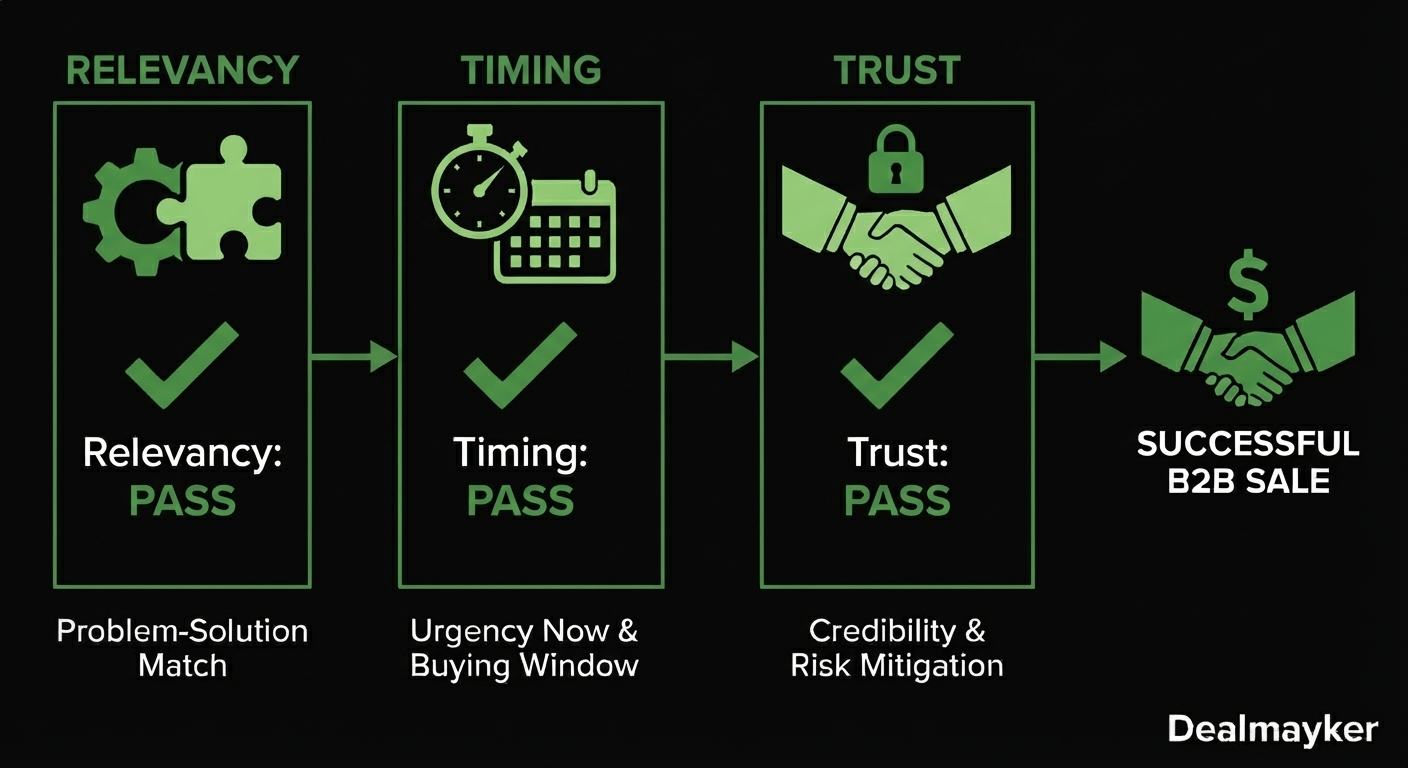
Why buyers say yes: relevancy, timing, and trust. Master these three elements and you'll never struggle with conversion again.
Pillar #1: Relevancy (Does Your Solution Match Their Problem?)
- Their specific pain point (not just "category fit")
- Their workflow and tools (does it integrate with how they work?)
- Their team's capabilities (can they actually implement it?)
- Their outcomes and goals (does it move their key metrics?)
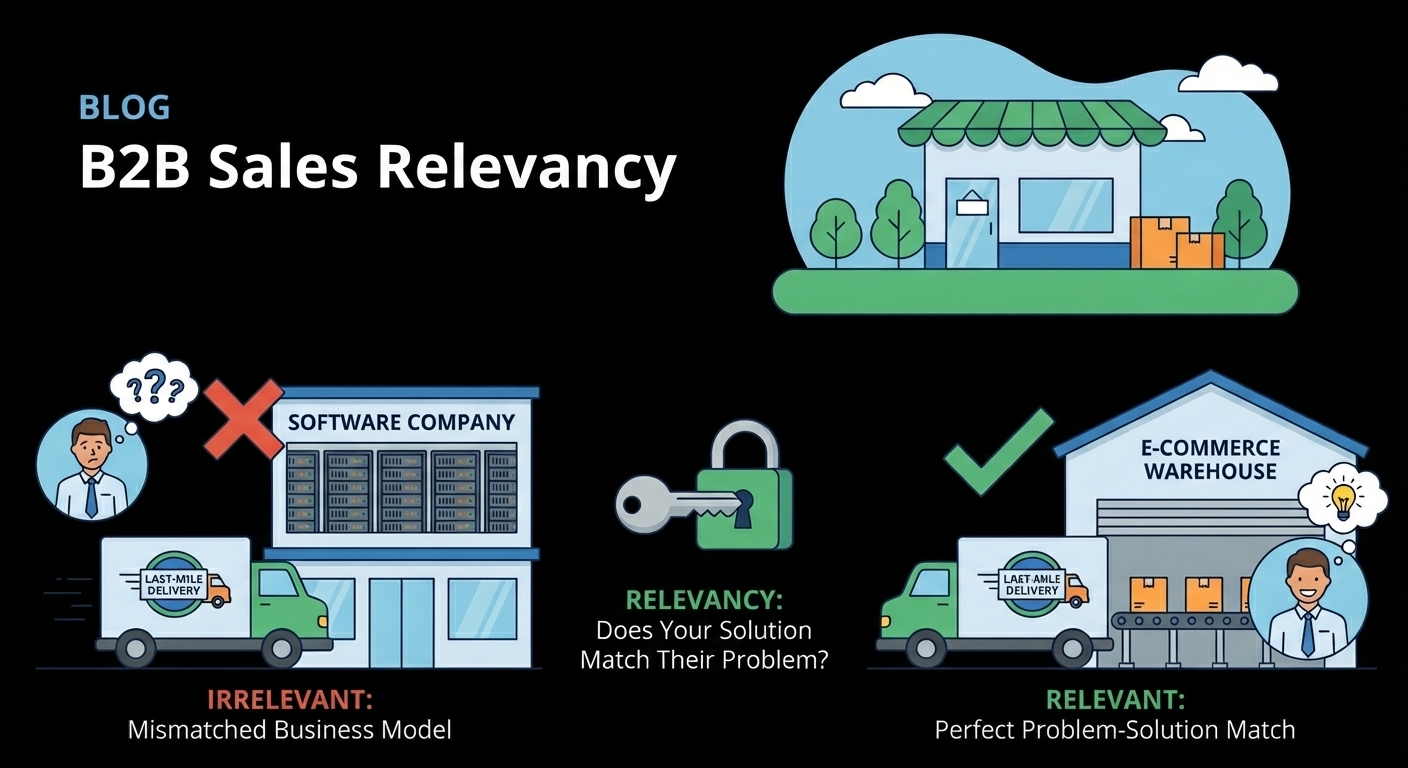
Pillar #2: Timing (Are They Ready to Buy Right Now?)
- Shop with 0 sales: The founder is probably doing deliveries themselves. They don't feel urgency because they can still manually handle it. There's no pain yet.
- Shop with 100 sales/day: They're drowning in logistics. They need a scalable solution yesterday. Their operations are breaking down. The pain is acute.
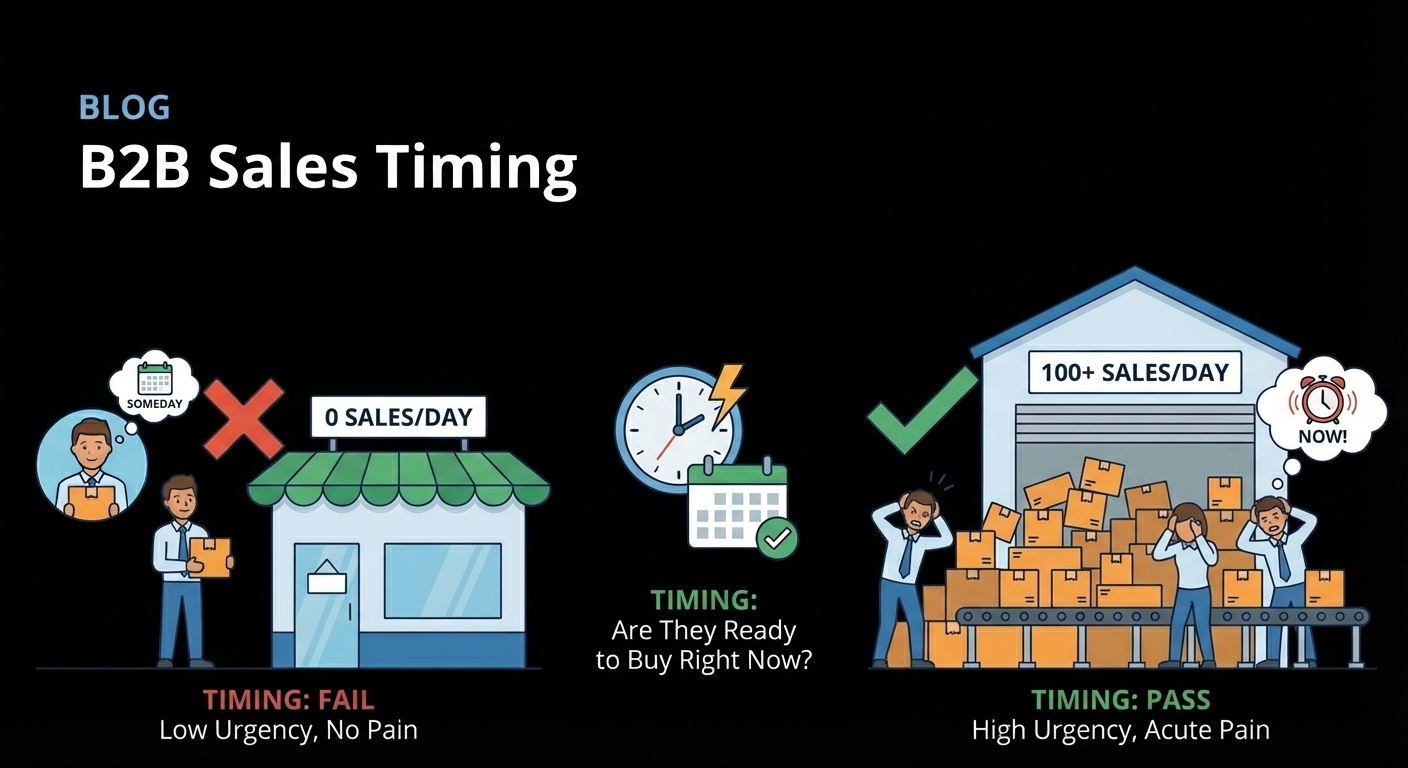
How to Identify Buying Timing (The Signals That Matter)
- Recent funding round
- New executive hires
- Team expansion (especially in relevant departments)
- New office openings
- Leadership transitions
- Company rebrands or repositioning
- New product launches
- Market entry or expansion
- Job postings for roles your product could eliminate or support
- Public complaints or discussions about current solutions
- Technology changes (migration projects, new tools adopted)
- Regulatory or compliance pressures
- Researching your category (content downloads, searches)
- Engaging with competitor content
- Attending relevant webinars or events
- Visiting your website multiple times
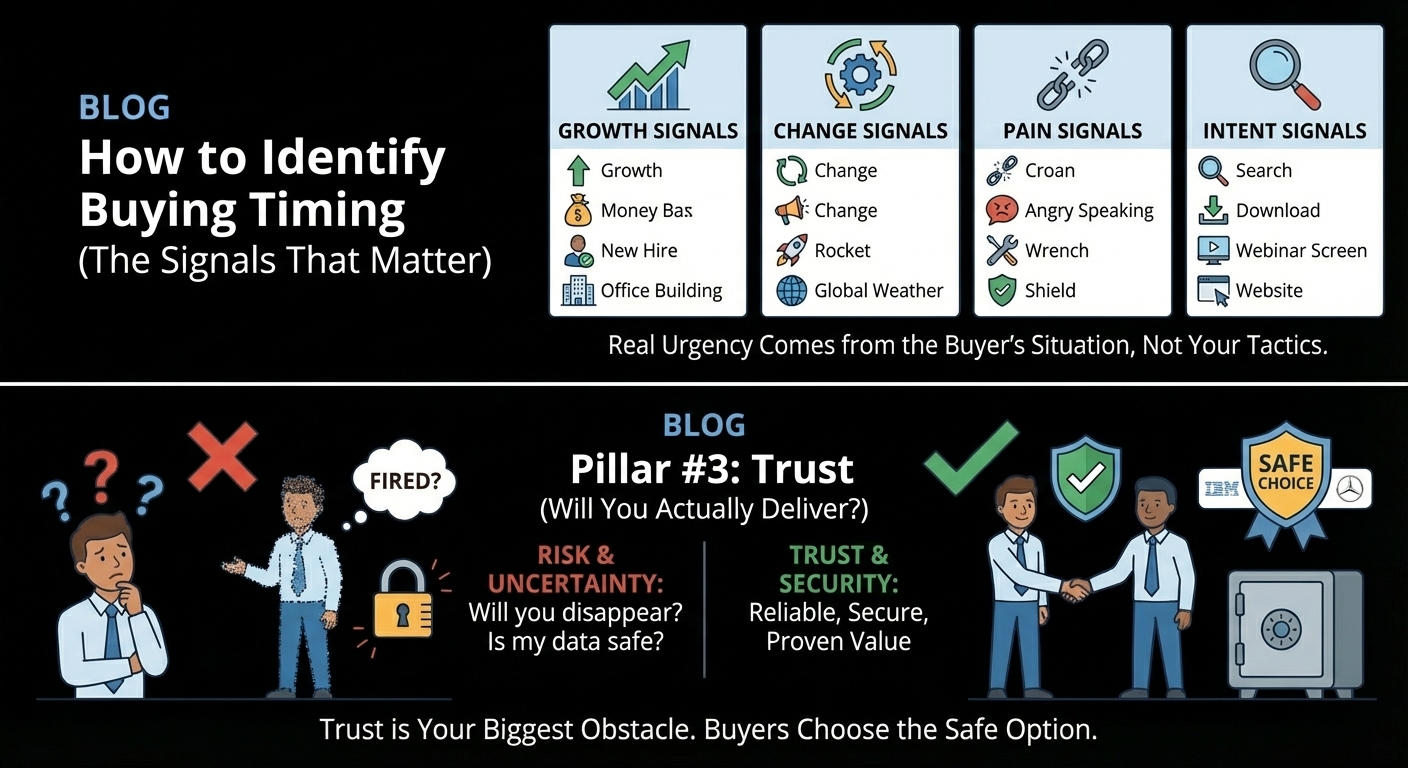
Pillar #3: Trust (Will You Actually Deliver?)
- "Will I be satisfied with the value for money?"
- "Will this person just disappear after payment?"
- "Are my payment details and data safe?"
- "Will this decision make me look good or get me fired?"
How to Build Trust When You Have Zero Social Proof
Here's how to break the cycle:
- Leverage your network
Your first customers should come from people who already trust you personally. First or second-degree connections know:- You'll answer when they call
- You won't disappear after payment
- You genuinely care about their success
- Offer satisfaction guarantees
Remove all risk from the buyer's side. Tell them: "I'll invoice you only if you're satisfied. If you're not happy, no invoice. No questions asked."
I've done 40-hour projects on this model. Some didn't pay. But the ones who did became my biggest advocates.
- Do white-glove onboarding
Make their success inevitable. Handle data migration, setup, integration - everything. Make it feel instant for them, even if it takes you days in the background. - Show your work transparently
Share your roadmap. Respond quickly. Be honest about limitations. Over-communicate. This builds credibility faster than any case study. - Get customer references early
Your first happy customer is worth more than 100 website visitors. Turn them into a reference, a case study, a testimonial. Their trust transfers to others.
Why Most Sales Tools Fail on These Three Pillars
- Relevancy? Sure, they match your basic filters. But do they actually have the specific pain you solve?
- Timing? No idea. The data is static. It doesn't show if they're ready to buy right now.
- Trust? Zero help here. You're still a stranger sending cold emails.
- Understanding not just who fits your ICP, but who's experiencing the problem right now
- Identifying buying signals that indicate urgency (hiring, funding, tool changes)
- Finding warm paths to build trust (mutual connections, shared communities)
Find prospects with all three pillars
Dealmayker identifies prospects with the right fit, buying signals for timing, and conversation starters to build trust - automatically.
Try FreeThe Three Pillars Framework in Action
Scenario 1: Perfect Relevancy, Wrong Timing
Prospect: Series A SaaS company, 20 employees, perfect ICP fit for your sales intelligence tool.
Reality: They just signed a 2-year contract with a competitor three months ago. They're not switching anytime soon.
Result: No matter how relevant your solution is, timing kills the deal. Save this for 18 months from now.
Scenario 2: Great Timing, Missing Trust
Prospect: Just posted a job for "Sales Operations Manager" and their LinkedIn shows recent funding. Perfect timing signals.
Reality: You're a cold email from a stranger. They've never heard of you. Zero trust.
Result: They ignore your outreach or respond with "not interested." You had timing but no credibility.
Scenario 3: All Three Pillars Aligned
Prospect: A second-degree connection (friend of a friend) just raised Series A and is hiring SDRs. Your mutual connection vouches for you.
Reality: You have relevancy (they need prospecting), timing (scaling sales now), and trust (warm intro).
Result: They take the call. You close within two weeks.
This is why your first customers should come from your network - it's the only place where all three pillars naturally exist.
How to Apply the Three Pillars Framework
- Audit your current pipeline
For each prospect, honestly assess:- Relevancy: Do they have the specific problem we solve? (Not just "could use us")
- Timing: Are they experiencing urgency right now? (Not "might need us later")
- Trust: Do they have a reason to believe we'll deliver? (Not "hopefully they'll trust us")
- Prioritize prospects with 3/3 pillars
These close fastest. Focus here first. Don't waste time trying to convince people missing two pillars. - Build specific plays for 2/3 situations
- Have relevancy + timing, missing trust? → Lead with social proof, offer guarantees, find warm intros
- Have relevancy + trust, missing timing? → Stay in touch, wait for trigger events, nurture relationship
- Have timing + trust, missing relevancy? → Might not be worth pursuing. Don't force fit.
- Source better at the top of funnel
Instead of just filtering by demographics, start with signals that indicate timing (hiring, funding, tool changes). Then check for relevancy and find trust paths. - Adjust your messaging for each pillar
- Relevancy messaging: "Here's the specific problem we solve and how"
- Timing messaging: "Here's why this matters right now for your situation"
- Trust messaging: "Here's proof we deliver" (social proof, guarantees, mutual connections)
- The right problem (relevancy)
- Urgency to solve it now (timing)
- A reason to believe you'll deliver (trust)
Stop guessing who's ready to buy
Get instant ICP matching (relevancy), buying signals (timing), and warm intro paths (trust) for every prospect. Start with 5 free credits.
Get Started FreeFrequently Asked Questions
What are the three pillars of B2B sales?
The three pillars are: (1) Relevancy - your solution matches their specific problem, (2) Timing - they have urgency to solve it right now, and (3) Trust - they believe you'll deliver. Every successful B2B sale requires all three pillars. Missing even one dramatically reduces your close rate.
Which pillar matters most: relevancy, timing, or trust?
Trust is often the most important, especially for early-stage companies. You can have perfect relevancy and timing, but if buyers don't trust you'll deliver, they won't buy. This is why your first customers should come from your network - trust already exists. As you scale, timing becomes increasingly important for prioritization.
How do I identify if a prospect has good timing?
Look for buying signals: recent funding, leadership changes, team expansion (especially in relevant departments), new job postings, tool migrations, public discussions about problems you solve, and multiple website visits. These indicate they're experiencing urgency right now, not "maybe someday."
Can I create urgency if timing is missing?
Rarely. Real urgency comes from the buyer's situation, not your tactics. Manufactured scarcity ("offer expires Friday!") doesn't work in B2B. Instead, focus on prospects who already have urgency and help them solve it faster. Save prospects with poor timing for later when trigger events occur.
How do I build trust when I have zero social proof?
Start with your network (first and second-degree connections who already trust you), offer satisfaction guarantees that remove all buyer risk, provide white-glove service that makes their success inevitable, communicate transparently about your product and limitations, and turn your first happy customers into references quickly.
Why do most sales tools fail on these three pillars?
Most tools only help with relevancy - finding people who match your ICP demographics. They don't show timing (are they ready now?) or help with trust (warm intro paths). This is why cold outreach has 1-2% response rates. You need contextual intelligence that identifies all three pillars, not just demographic matches.
What's the difference between ICP fit and true relevancy?
ICP fit is demographic: "Series A SaaS CEO, 10-50 employees." True relevancy is contextual: "They have this specific problem right now that our solution solves." Someone can match your ICP perfectly but have zero relevancy if they don't have the actual pain point you address.
Should I pursue prospects missing one or two pillars?
Depends which pillars. If they have relevancy + timing but you're missing trust, you can build it through social proof and guarantees. If they have relevancy + trust but timing is off, stay in touch and wait for trigger events. If they're missing relevancy or have only one pillar, probably not worth pursuing - focus on better-fit prospects.