Your first 5 customers are already in your network
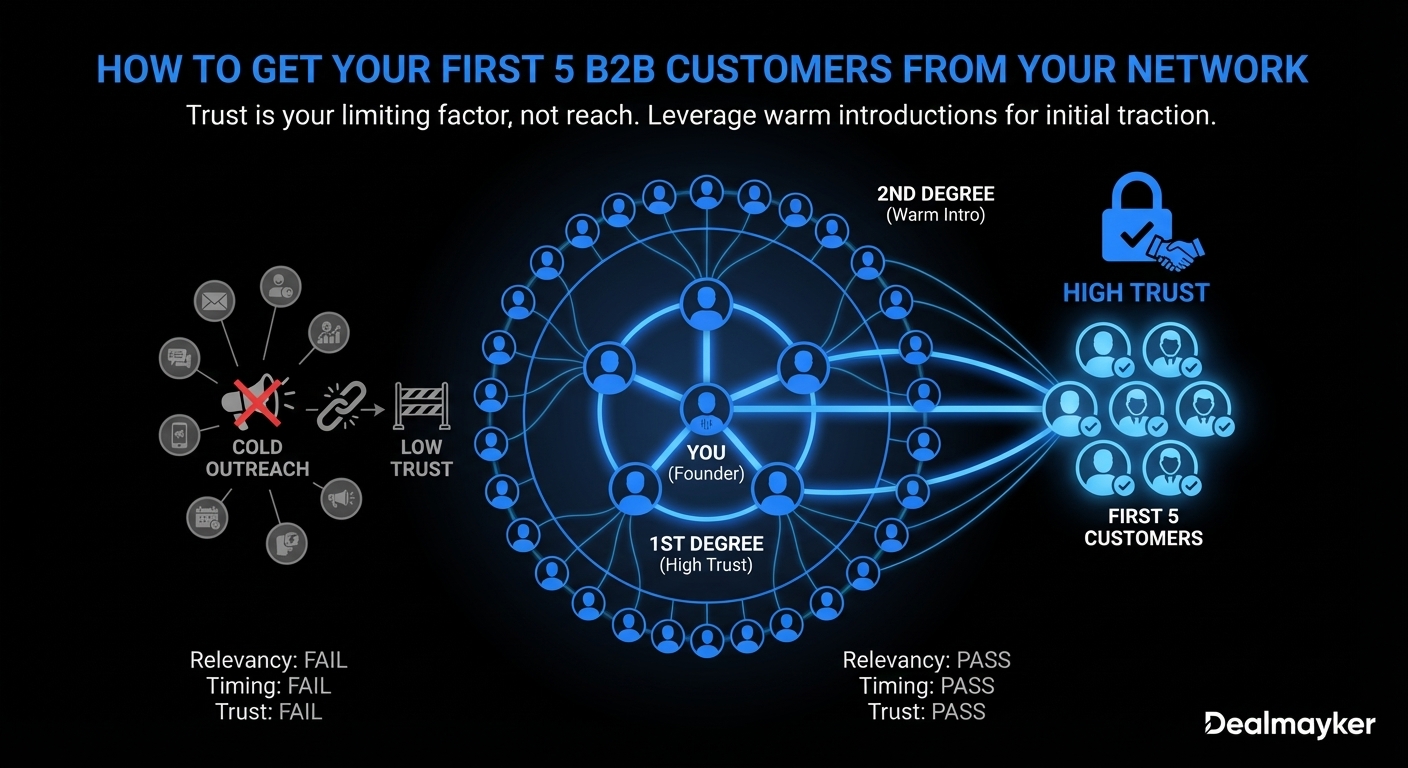
Trust is your limiting factor, not reach. Why warm introductions convert 10x better than cold outreach - and how to leverage first and second-degree connections for initial traction.
Why Your Network Is Your Unfair Advantage
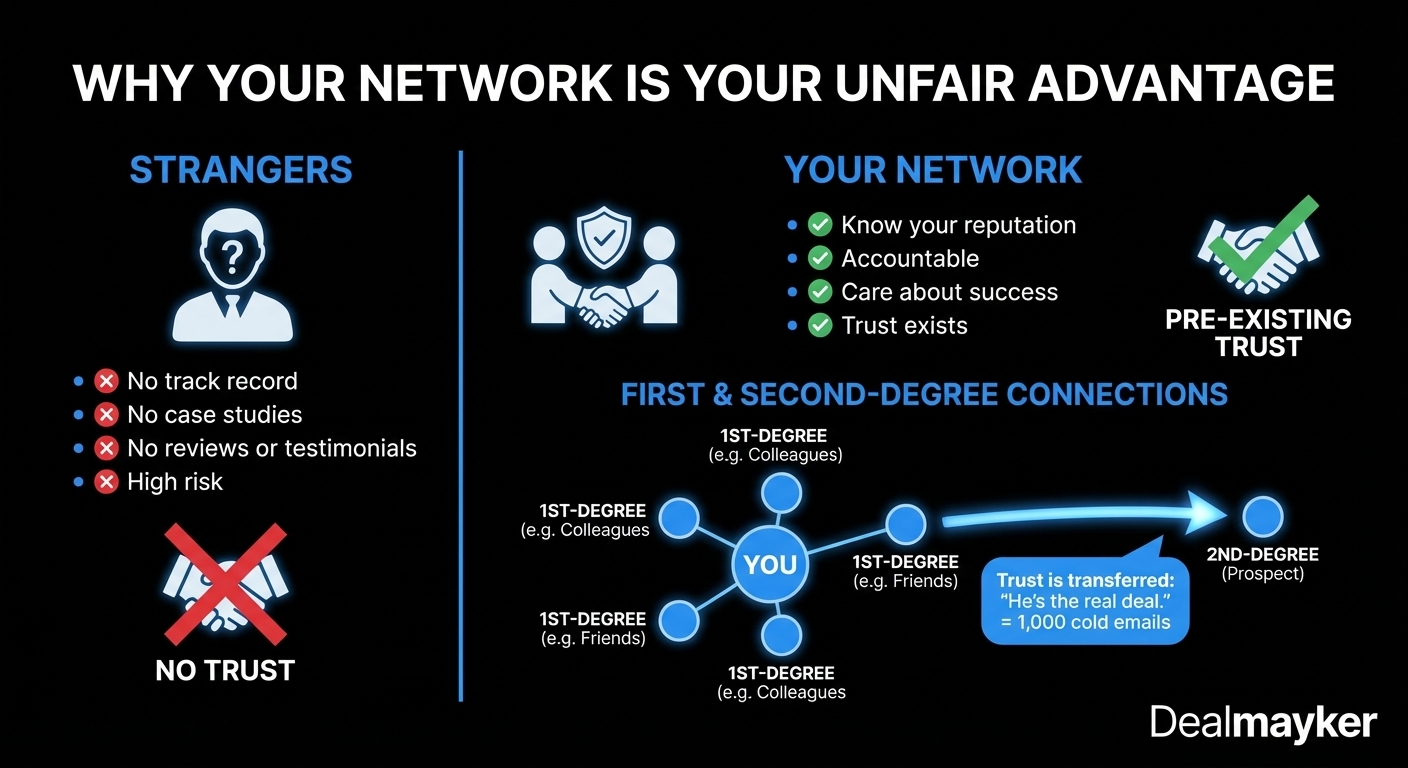
- A founder with no track record
- A product with no case studies
- A company with no reviews or testimonials
- A solution that might not even exist in 6 months
- You'll pick up the phone if something breaks
- You won't disappear after they pay you
- You genuinely care about their success
- You're accountable because your reputation is on the line
First-Degree vs Second-Degree Connections
- Current and former colleagues
- Friends and family
- People you've worked with on projects
- Community members you interact with regularly
- Former clients or customers from previous roles
How to Map Your Network for Customer Opportunities
- Make a comprehensive list
Spend 2 hours making a list of everyone you know. Categories:Professional contacts:
- Current colleagues
- Former colleagues from every job
- Managers and mentors
- People you've freelanced or consulted for
- Conference connections
Community connections:
- Online community members (Slack groups, Discord, Reddit)
- Local meetup attendees
- Industry association members
- People you've collaborated with on projects
Personal connections:
- Friends (especially those who work in your target industry)
- Family members in relevant roles
- College or university connections
- Neighbors who run businesses
- Identify who has the problem you solve
Go through your list and mark anyone who:- Works in your target industry
- Has a role that experiences your problem
- Works at a company that matches your ICP
- Has mentioned pain points related to your solution
- Prioritize by problem urgency
Not everyone with the problem has urgency to solve it now. Prioritize people who:- Recently changed roles or companies
- Work at fast-growing companies
- Have recently posted about related frustrations
- Are in a position to make buying decisions
You'll likely find 10-20 people who fit. That's your starting list.
The Network Outreach Framework
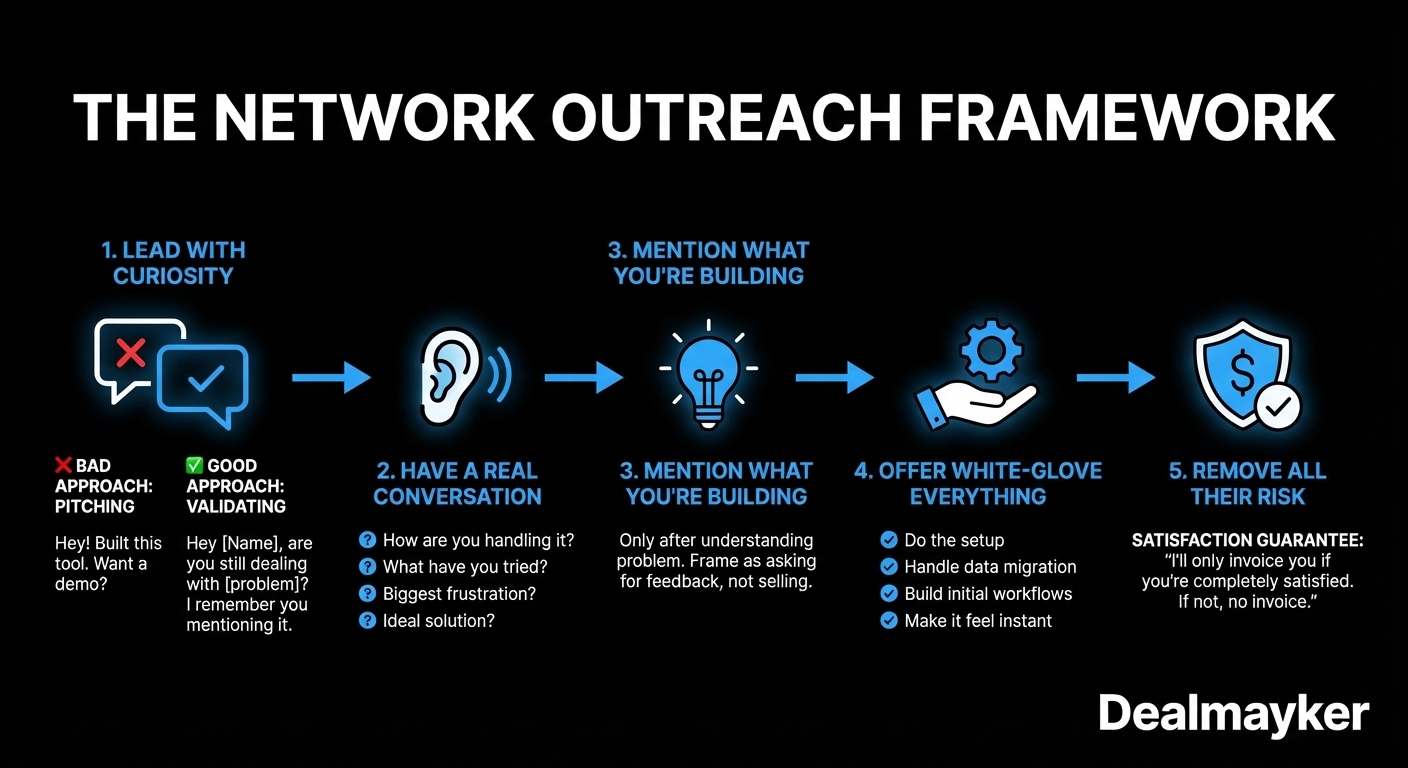
- Lead with curiosity, not pitching
❌ Bad approach:
"Hey! I built this new tool for [X]. Would you like a demo?"✅ Good approach:
"Hey [Name], hope you're well! Quick question - are you still dealing with [specific problem] at [Company]? I remember you mentioning it a few months ago."Start by validating the problem exists and is urgent. Don't pitch yet.
- Have a real conversation
If they respond yes, ask follow-up questions:- "How are you currently handling it?"
- "What have you tried so far?"
- "What's the biggest frustration with your current approach?"
- "If you could wave a magic wand, what would the ideal solution look like?"
Listen. Take notes. Understand their specific situation deeply.
- Mention what you're building (if relevant)
Only after you understand their problem:
"That's interesting - I'm actually building something that might help with exactly that. Would you be open to seeing an early version and giving me feedback?"
Frame it as asking for their help and expertise, not selling them something.
- Offer white-glove everything
If they say yes:- Do the setup for them
- Handle data migration
- Build initial workflows
- Make it feel instant even if it takes you days
- Remove all their risk
"Here's how this works: I'll set everything up for you. You use it for [timeframe]. I'll only invoice you if you're completely satisfied. If you're not happy, no invoice. No questions asked."
This makes saying yes incredibly easy.
How to Ask for Second-Degree Introductions
- Identify who in your network knows your ICP
Think about which of your connections work at companies with your target customers, or are in communities where your ICP hangs out. - Ask specifically (not generically)
❌ Bad ask:
"Hey, do you know anyone who might be interested in my product?"✅ Good ask:
"Hey [Name], quick question: Do you know any [specific role] at [specific type of company] who's currently dealing with [specific problem]? I'm looking to get feedback from people in that situation."Be specific about who you want to meet and why. Generic asks get generic responses (or no response).
- Make it easy for them to say yes
Provide them with:- Exactly who you want to meet
- Why you want to meet them (feedback, not selling)
- A short blurb they can copy/paste for the intro
Example:
"If you know someone like that, here's a quick intro you could send:'Hey [Prospect], I want to introduce you to [Your Name]. They're building [solution] for [specific problem]. I thought you might have valuable insights since you're dealing with this at [Company]. Are you open to a quick chat?'"
- Follow up thoughtfully
When they make the intro, respond quickly to both people:- Thank your connection publicly
- Make it easy for the prospect to engage
- Suggest a specific time or ask for theirs
- Report back
After the conversation, update your connection on how it went. This makes them more likely to make future intros.
"Thanks for the intro to Sarah! Had a great chat - turns out she's dealing with exactly what I thought. Really appreciate you connecting us."
Find warm paths to your prospects
Dealmayker shows you mutual connections and warm intro paths to prospects - so you can leverage trust instead of cold outreach.
Try FreeWhat to Do When Your Network Doesn't Match Your ICP
- Expand your network strategically
- Join communities where your ICP hangs out: Slack groups, Discord servers, Reddit communities, LinkedIn groups
- Attend relevant meetups and events: Local industry meetups, conferences, workshops
- Contribute valuable content: Answer questions, share insights, be genuinely helpful
- Build relationships first: Don't immediately pitch. Spend 4-8 weeks being valuable before asking for anything
- Leverage your network's networks
Your connections don't need to be your ICP - they just need to know your ICP.
Ask your network:
- "Who do you know that works in [industry]?"
- "Are you in any communities with [target role]?"
- "Do you know anyone dealing with [specific problem]?"
- Get creative with adjacent connections
If you're targeting SaaS founders but know a lot of developers, developers often know founders. If you're targeting marketing leaders but know salespeople, they often work together.
Map the adjacent networks.
- Redefine your ICP based on who you do know
Sometimes your initial ICP assumption is wrong. If you have strong connections in a slightly different segment, test whether they have the same problem.
You might discover a better-fit ICP than you originally thought.
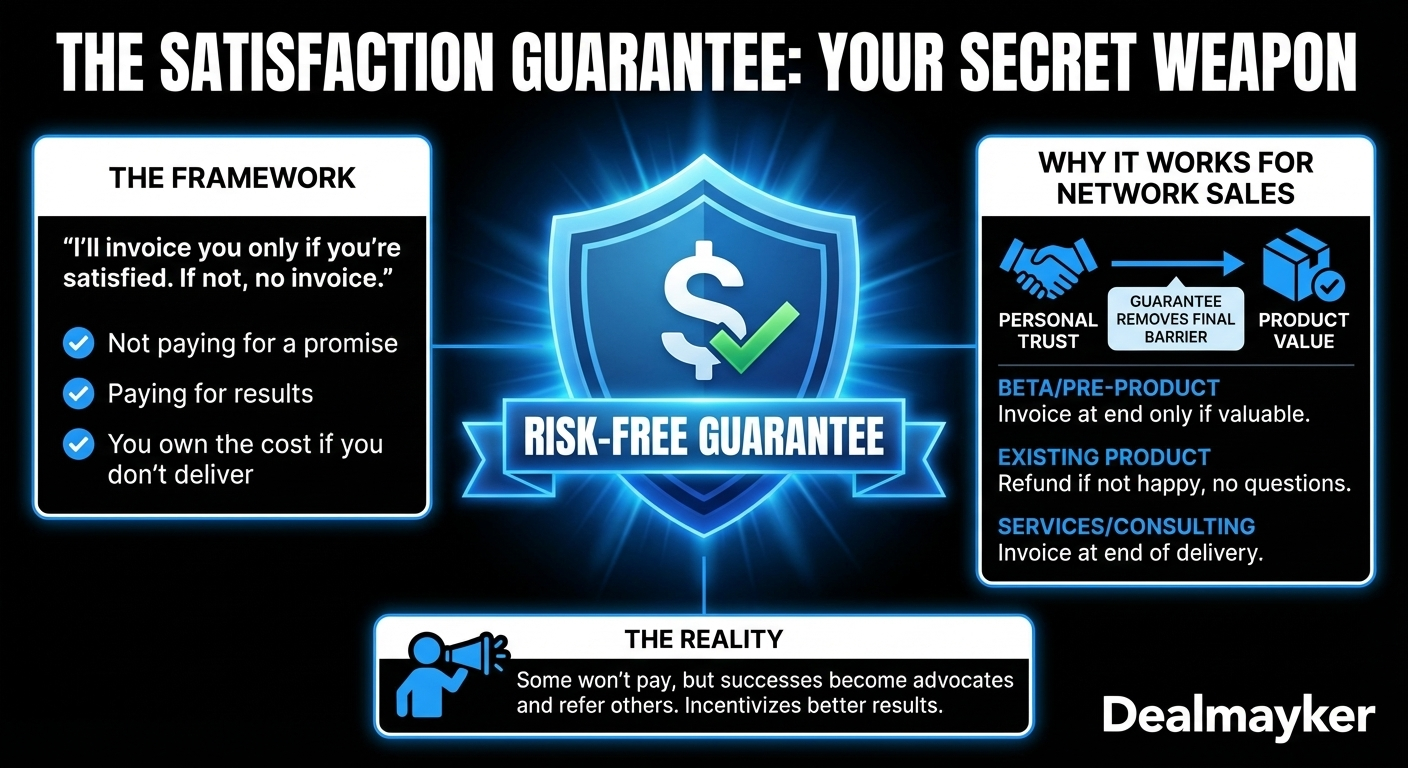
The Satisfaction Guarantee: Your Secret Weapon
- They're not paying for a promise
- They're paying for results
- If you don't deliver, you own the cost
Making Your First Network Customer Wildly Successful
- Do the setup yourself, don't send them instructions
- Handle data migration and imports
- Build initial workflows for them
- Create sample data or examples relevant to their use case
- Make it feel instant even if it takes you days in the background
- Check in weekly (at minimum)
- Respond to questions within hours, not days
- Ask for feedback constantly
- Fix issues immediately
- Help them with their workflow even if it's not your product
- Introduce them to people who can help them
- Share relevant resources and insights
- Be genuinely invested in their success
Turning Your First 5 into Your Next 10
- Ask for referrals directly
After they've been using your product for 2-4 weeks and are getting value:"I'm so glad this is working well for you! Quick question: who else do you know that might be dealing with [problem]? I'm still in early stages and looking for great customers to work with."
If you did a good job, they'll be excited to tell their friends and colleagues.
- Build case studies
Document their success story:- What problem were they facing?
- What had they tried before?
- How did your solution help?
- What specific metrics improved?
Get their permission to share this publicly. Now you have social proof for prospects outside your network.
- Ask to use them as a reference
"Would you be comfortable being a reference for prospects who want to hear from a real customer? I'd only send people your way occasionally, and I'd ask you first each time."Having 2-3 willing references makes closing the next 10 customers dramatically easier.
- Look for patterns
How are your first 5 customers similar?- What industries are they in?
- What roles do they have?
- What specific problems did they all share?
- How do they use your product similarly?
These patterns tell you who your real ICP is - which might be different from who you thought it would be.
- Expand into their networks
Your first 5 customers now become part of your network. They know people you don't. Ask them for intros to their connections who might have the same problem.
Here's your action plan for this week:
- Day 1: Make a comprehensive list of everyone you know (aim for 100+ people)
- Day 2: Identify 10-20 people who might have the problem you solve
- Day 3: Reach out to 5 of them with genuine curiosity (not pitching)
- Day 4-5: Have conversations, validate their problems, understand their situation
- Day 6: Offer your solution to 2-3 who have strong problem/urgency fit
- Day 7: Do whatever it takes to make your first customer wildly successful
Your network is your unfair advantage. Stop trying to crack cold outreach when you have warm connections ready to trust you.
Trust is your limiting factor, not reach. Your network solves the trust problem. Everything else is just execution.
Pick three people from your network right now. Text them. That's how you get customer #1.Turn your network into your growth engine
Get ICP matching, buying signals, and conversation starters for prospects in your network. Start with 5 free credits.
Get Started FreeFrequently Asked Questions
Why should I get my first customers from my network instead of cold outreach?
Trust is your limiting factor, not reach. Your network already trusts you - they know you'll deliver, won't disappear after payment, and genuinely care about their success. Cold prospects have zero reason to trust an unproven founder with no social proof. Network connections convert 10x better because trust already exists.
What's the difference between first-degree and second-degree connections?
First-degree connections are people you know personally and very well (colleagues, friends, community members). Second-degree connections are people your first-degree network knows well enough to introduce you to. When someone introduces you, they transfer their trust - making second-degree warm intros nearly as effective as first-degree.
What if nobody in my network matches my ICP?
Four options: (1) Expand your network strategically by joining communities where your ICP hangs out, (2) Leverage your network's networks - your connections don't need to be your ICP, they just need to know your ICP, (3) Look for adjacent connections - if you target founders but know developers, developers often know founders, (4) Test whether your ICP assumption is wrong - sometimes your best customers are in a segment you didn't expect.
How do I reach out to my network without being salesy?
Lead with curiosity, not pitching. Ask if they're still dealing with [specific problem] you remember them mentioning. Have a real conversation to understand their situation. Only after understanding their pain should you mention what you're building - and frame it as asking for their feedback and help, not selling them something.
How do I ask for introductions to second-degree connections?
Be specific, not generic. Instead of "do you know anyone interested in my product?" ask "do you know any [specific role] at [specific company type] dealing with [specific problem]?" Provide them with an intro blurb they can copy/paste. Make it about getting feedback, not making a sale. Report back after the intro to make them willing to help again.
What's a satisfaction guarantee and why does it work?
Tell prospects: "I'll invoice you only if you're satisfied. Not happy? No invoice. No questions asked." This removes all risk from their side - they're paying for results, not promises. It works because your network already trusts you personally; the guarantee removes the final barrier of trusting your product will deliver value. It makes saying yes incredibly easy.
How do I turn my first 5 network customers into my next 10?
Five strategies: (1) Ask for direct referrals after they're getting value, (2) Build detailed case studies documenting their success, (3) Ask to use them as references for prospects, (4) Look for patterns in how they're similar to refine your ICP, (5) Expand into their networks - they know people you don't, ask for intros to their connections.
Should I still do white-glove service for network customers?
Absolutely. Do setup, data migration, workflow creation - everything for them. Make their experience feel instant even if it takes you days in the background. Network customers aren't just revenue - they're your future references, case studies, and referral sources. Making them wildly successful is how you get customers 2, 3, 4, and 5.